

Our mobile apps are moving to Howarth Software
Everything to do with the apps is being moved across to howarthsoftware.co.uk, our parent site, so that it can focus on the mobile apps and other software. Every app, its screenshots, support, privacy and terms are already there, and that is where new apps will appear first.
Howarth Games, this sister site, covers a lot more: the Commodore 64 games, the studio, the years making gaming machines and the rest of the story.
Kinesiology
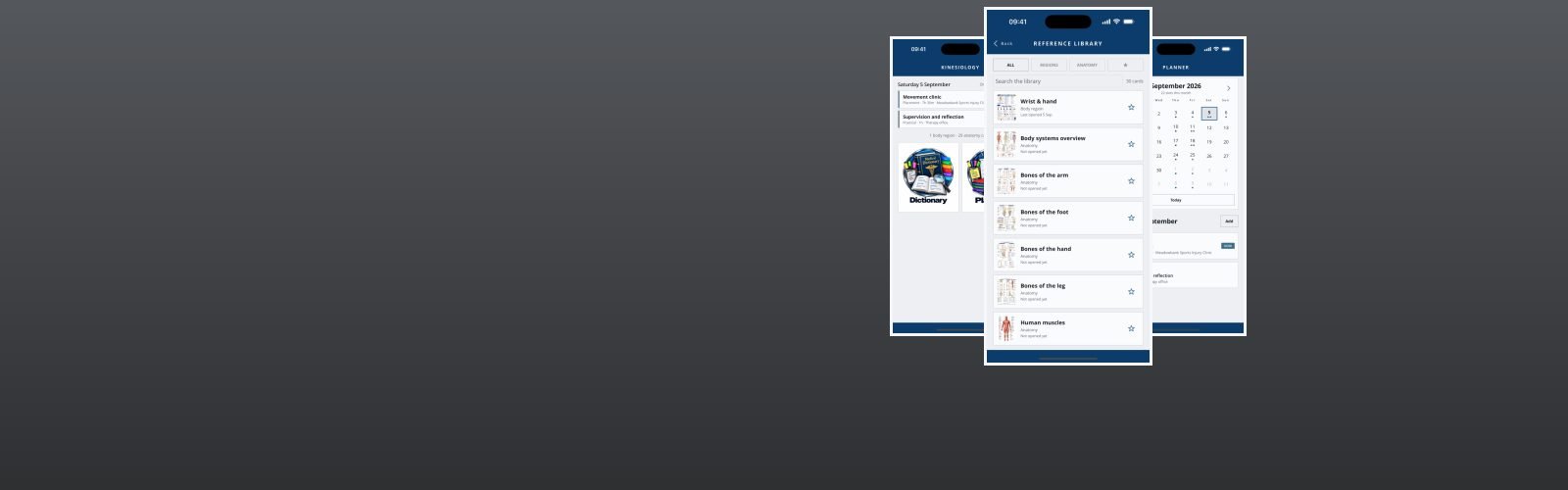
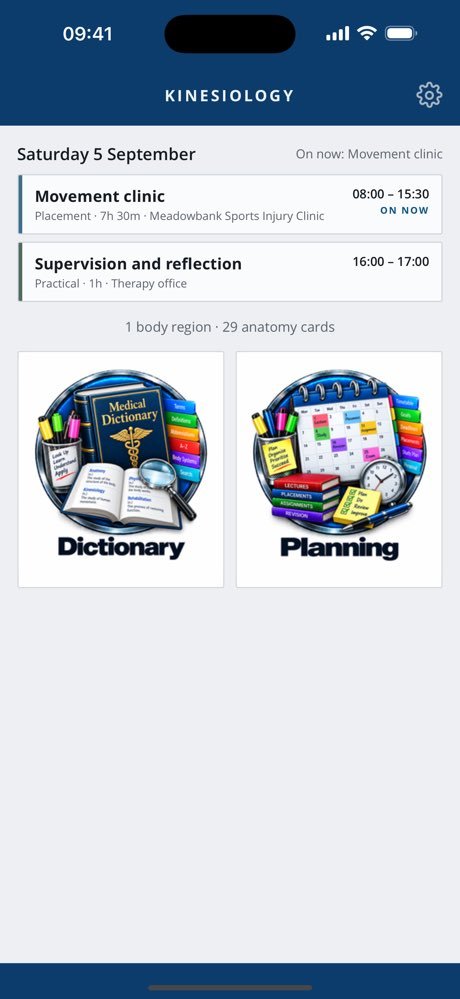
Kinesiology is two things a kinesiologist needs on the same phone: a reference library they can open in a corridor, and the planner that says where they are supposed to be. Both are free.
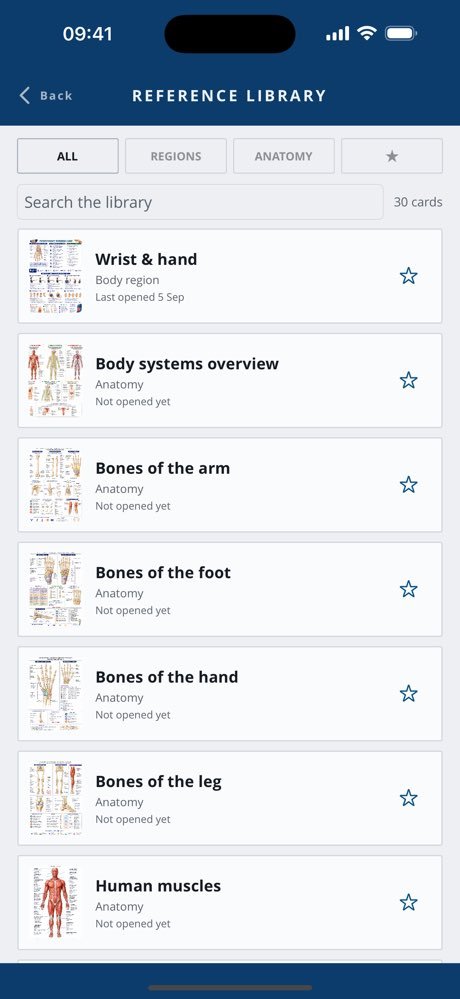
The reference library is thirty-seven illustrated cards covering anatomy, physiology and clinical practice — the cervical spine, the shoulder, the knee, the systems, the senses, and the body regions somebody arrives complaining about. Every card is a drawn page, a diagram and the words that go with it, rather than a wall of text. They ship inside the app: no download, no account and no signal required, which matters on a ward and matters more on a placement forty minutes from anywhere.
The library remembers what you have opened, so revising what you have not read is a matter of scrolling. That can be turned off in Settings if you would rather it did not.
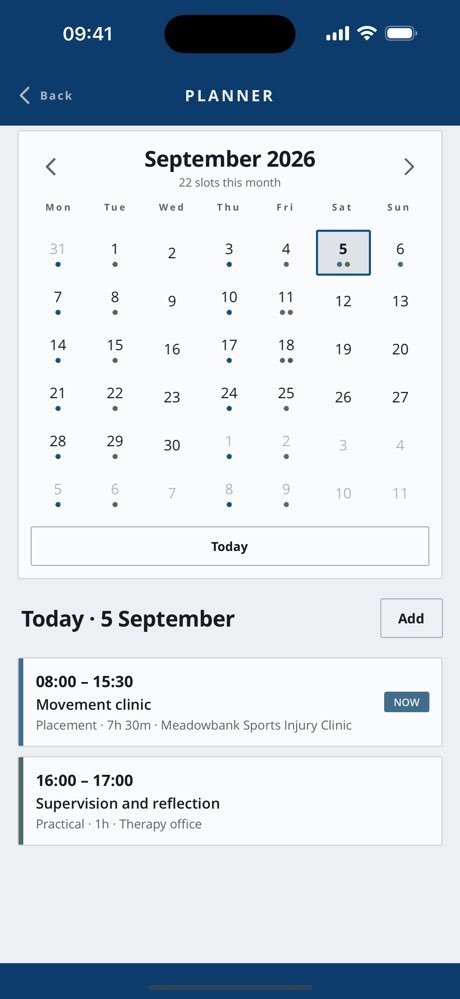
The planner holds lectures, placement shifts, clinics, booked study and exams, each in its own colour so a day can be read at a glance rather than word by word. A weekly lecture is entered once and shows every week. Today’s slots sit at the top of the dashboard and the one happening now is marked, because on a placement morning the question is not what the day holds but where you should be standing.
Everything you write stays on the device, in a database encrypted at rest. A PIN can be set, and is worth setting: a student’s phone gets handed round a ward office. It is a study aid and not a clinical tool — not a medical device, it diagnoses nothing, and it is no substitute for your university’s teaching, your practice educator or your own judgement.
- On the App StoreAs Kinesiology and Anatomy
- PlatformiPhone, portrait, iOS 15 and later
- StorageOn device only, encrypted at rest, PIN protected
- ReferenceThirty-seven illustrated cards, offline, free
- ScreensHome, reference library, planner, settings
Free, and what a subscription unlocks
The reference library is free, and the planner is free and stays free — a student whose subscription has lapsed still has a shift to get to at half past seven.
A subscription is for the record-keeping half, the part you build up over three years and come back to: clinical notes from placement kept and searchable, assessments with the competencies signed off against them, and dictation that keeps both the words and the recording. These are in development and are not in this first release. The subscription screen names them plainly as such, and nothing is charged for a feature that is not there yet.
When it arrives it will come in two lengths, monthly and quarterly, renewing until you cancel it in the App Store. Cancelling takes nothing off your phone.
- Monthly See the App Store renews every month
- Quarterly See the App Store renews every three months
Prices are not listed here, because they can change. Check the App Store for the up-to-date price, in your own currency, before you subscribe — it is the App Store that takes the payment. Most of the apps give new subscribers an introductory offer: an introductory period at the start, before the first payment is taken. How long it lasts can change, so again, check the App Store for the details.
The one piece of personal information involved is your email address, held so the subscription can be recognised as yours. See the privacy policy and the terms of use.
Every screen in the app
Five screens, three at a time — swipe, or use the arrows and dots. Tap a screenshot to see it full size. The apps are still being developed, so screens may look different in the version you download — these shots are not always updated the moment something changes.
Interested in an app like this, or in something else for iPhone, iPad or Android? Get in touch.